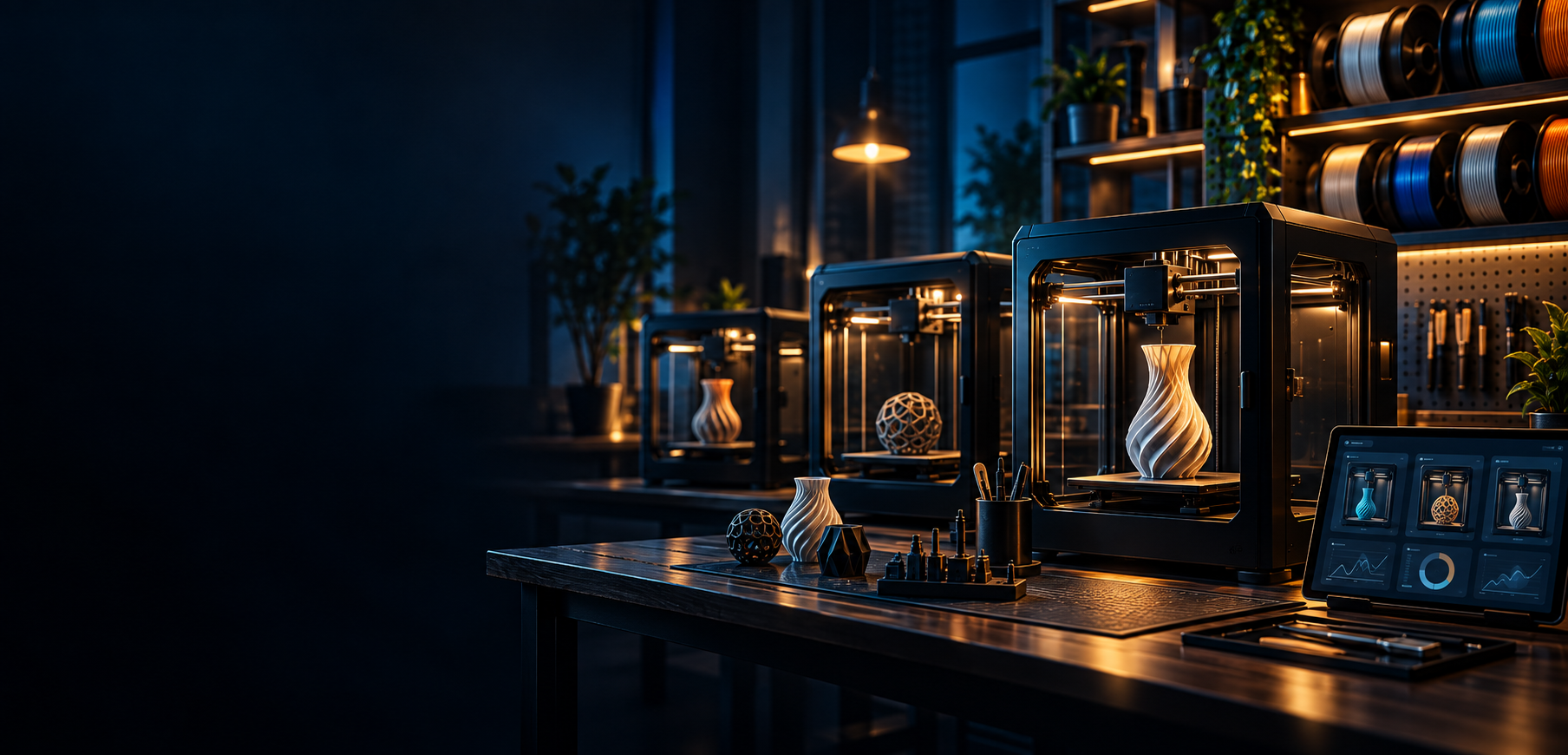
Illustrated 3D printing workshop with enclosed printers, filament spools and printed vases
Choosing What To Print Next

What To Print With PLA

Choose practical PLA 3D prints that match the colors, spool amounts, printer, and time you already have available.

Last updated 2026-09-30

Workflow

Step 1

Check PLA colors

Step 2

Check remaining grams

Step 3

Pick an indoor use

Step 4

Confirm printer fit

Step 5

Estimate time

Step 6

Print and record

Why PLA is a good starting point

PLA is one of the easiest and most common 3D printing materials because it prints cleanly on many desktop printers, comes in many colors, and works well for indoor objects. The best PLA prints use those strengths instead of asking PLA to do jobs better suited for tougher or more heat-resistant materials.

  • PLA is ideal for beginner-friendly prints, organizers, toys, display models, labels, and prototypes.
  • PLA usually prints with less warping than ABS or ASA and is easier to dial in than many flexible materials.
  • PLA is not the best choice for hot cars, outdoor sun, high-impact loads, or parts that need long-term heat resistance.
  • The best PLA project is one that fits your printer, uses colors you already own, and does not demand material properties PLA cannot provide.

Best things to print with PLA

The strongest PLA ideas are practical, visible, and low-stress. PLA is especially useful when shape, color, speed, and ease matter more than heat resistance or heavy mechanical load.

  • Desk organizers for pens, SD cards, tools, spare nozzles, batteries, and hobby parts.
  • Planters, decorative containers, small vases, and indoor display pieces.
  • Flexi toys, fidget prints, keychains, bookmarks, name plates, and simple gifts.
  • Cable clips, cord guides, drawer labels, shelf tags, and light-duty hooks.
  • Gridfinity bins, storage dividers, small trays, and workshop organization pieces.
  • Calibration cubes, first-layer tests, tolerance gauges, temperature towers, and color swatches.
  • Printer accessories such as scraper holders, nozzle trays, spool clips, and simple tool racks.
  • Prototype parts where you want to test shape, fit, or size before printing in PETG, TPU, ABS, or ASA.

When PLA is the right choice

PLA is usually the right choice when the print will live indoors, will not sit near heat, and does not need to flex or survive heavy stress. It is also a smart material for testing a design before spending stronger or more expensive filament.

SituationGood PLA choiceWhy it works
You want a quick useful printCable clip, small tray, drawer divider, labelPLA prints quickly and cleanly for simple indoor objects.
You want something decorativePlanter, figure, sign, display standPLA has strong color options and good visual finish.
You are testing fitPrototype bracket, mockup, spacer, templatePLA is easy to print before committing to tougher material.
You are learning your printerCalibration cube, temperature tower, Benchy-style testPLA is forgiving and exposes printer setup issues clearly.
You want a giftBookmark, keychain, fidget, small toy, desk accessoryPLA is easy to print in fun colors and finishes.

When not to use PLA

PLA is not a universal material. It can soften in heat, creep under load, and crack where PETG, TPU, ABS, ASA, nylon, or polycarbonate would be a better match.

  • Avoid PLA for parts that may sit in a hot car, greenhouse, garage heat, or direct outdoor sun.
  • Avoid PLA for flexible parts such as bumpers, grips, seals, feet, or straps.
  • Use PETG, ABS, ASA, or nylon instead when the part needs more durability, heat resistance, or outdoor stability.
  • Use PLA for prototypes when you are not sure whether the shape or dimensions are right yet.

PLA ideas based on what you have

A better PLA print starts with your actual spool shelf. Color, remaining grams, and printer capability should narrow the decision before you start browsing another giant list of models.

What you haveGood PLA printsPrintNext angle
Bright colorsToys, signs, labels, gifts, decorative partsUse visible colors for prints where appearance matters.
Neutral colorsOrganizers, brackets, trays, desk tools, Gridfinity binsUse practical colors for utility prints that blend into a workspace.
Small leftoversBookmarks, clips, labels, swatches, small hooksMatch models to remaining grams before the spool runs out.
Large partial spoolPlanters, storage bins, larger organizers, display modelsUse the bigger remaining amount for one meaningful print.
New PLA brandCalibration prints, swatches, tolerance gauges, small utility testsRecord results so future recommendations are smarter.

How PrintNext helps you choose PLA prints

Most PLA idea lists start with random models. PrintNext starts with the printer, filament, and project context you already have. That makes PLA recommendations more useful because the goal is not just finding a cool model. The goal is finding something ready to print with your actual setup.

PrintNext areaHow it helps with PLA
RecommendationsFind PLA-friendly print ideas matched to your printer, colors, and readiness.
Filament InventoryTrack PLA colors, remaining grams, spool value, and low-stock risk.
PrintersCheck whether the model fits your build volume and printer capability.
Cost CalculatorPreview filament use, cost, and time before starting the print.
Private WorkspaceSave PLA project ideas, files, notes, and finished print records.

Use PLA for a low-stress indoor project

A desktop card holder makes good use of PLA’s clean detail and color range. Measure the card stack, keep the base stable, and slice a small version first. If the same holder will sit in a hot vehicle or carry a sustained load, revisit the material choice instead of assuming an indoor success proves it suitable everywhere.

  • Check the intended environment, especially heat and continuous loading.
  • Match the profile to the specific PLA blend rather than its color alone.
  • Inspect narrow slots and text in the sliced preview at the final scale.

FAQ

Common questions

What is PLA best for 3D printing?

PLA is best for indoor prints, visual models, organizers, toys, labels, prototypes, calibration pieces, and light-duty functional parts that do not need high heat resistance.

What should I print with leftover PLA?

Good leftover PLA prints include cable clips, bookmarks, labels, keychains, calibration pieces, fidget toys, small organizers, plant markers, and printer accessories.

Can PLA be used for functional parts?

PLA can be used for light-duty functional parts indoors, but PETG, ABS, ASA, nylon, or polycarbonate may be better for heat, impact, outdoor use, or long-term stress.

Is PLA good for beginners?

Yes. PLA is usually the easiest first filament because it prints reliably on many desktop printers and is forgiving while you learn slicer settings and first-layer behavior.

How does PrintNext help with PLA prints?

PrintNext connects PLA inventory, printer fit, cost estimates, recommendations, projects, and print history so you can choose prints based on the filament you actually own.

Continue learning

Related PrintNext guides

These pages connect the same workflow from file format decisions to color planning, inventory, and print cost.

View all guides

Choosing What To Print Next

What Should I 3D Print Next?

Not sure what to 3D print next? Learn how to choose your next 3D printing project based on your printer, filament, remaining material, time, cost, skill level, and goals.

Choosing What To Print Next

What To Print With Leftover Filament

Use leftover filament for practical 3D prints that match the material, color, and grams you already have instead of letting partial spools sit unused.

Choosing What To Print Next

What To Print With PETG

Choose practical PETG 3D prints for stronger utility parts, printer accessories, storage, clips, brackets, and durable projects that match your setup.

Start Here

Beginner 3D Printing Guide

New to 3D printing? Learn how 3D printers work, how to choose filament, prepare models, slice files, and complete your first successful print.

Filament & Materials

PLA vs PETG vs ABS

Compare PLA, PETG, and ABS for ease of printing, strength, heat resistance, warping, outdoor use, cost, and beginner-friendliness.

Filament & Materials

PLA vs PETG vs TPU

Compare PLA, PETG, and TPU for ease of printing, flexibility, toughness, beginner use, functional parts, and common 3D printing workflows.

Filament & Materials

How to Choose Filament

Choose the right 3D printer filament by matching material properties to the print use case, printer setup, strength needs, and environment.

Workspace & Cost Planning

How Much Filament a Print Uses

Learn what affects filament usage in 3D printing, including scale, infill, walls, supports, layer height, and multi-color purge.