Color STL files for multi-color 3D printing

How to Color STL Files for Multi-Color 3D Printing

STL files are great for model geometry, but they usually do not preserve color instructions. The practical workflow is to color the model in a tool like Color Studio, then export a color-ready 3MF for your slicer and printer setup.

Last updated 2026-06-17/Reviewed by PrintNext Team
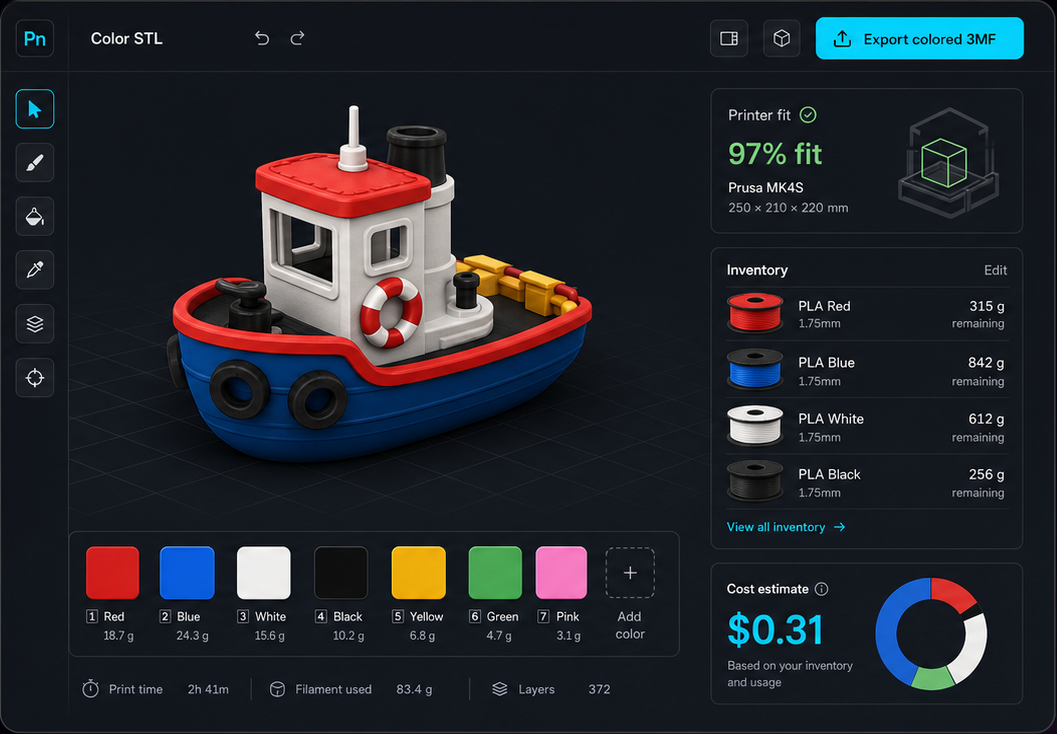
Color Studio workspace for coloring STL files and exporting color-ready 3MF files

Quick answer

The easiest way to color an STL is to paint it, then export 3MF.

Upload the STL into a coloring or slicer tool, paint the model regions, preview the color assignments, and save or export a color-ready 3MF. Use STL for basic model geometry; use 3MF when you need color, material, and project data to survive the next step.

STL to 3MF Workflow Diagram

STL File
Color Model
Export 3MF
Open In Slicer
3D Print

STL, 3MF, and color

Why STL files do not store color well

STL was built around surface geometry. In normal 3D printing workflows, it tells software what shape to print, not which faces should be red, blue, black, or translucent. That is why a model can look colored in one tool but lose those assignments when exported back to STL.

STL is widely supported, but usually geometry-only.

3MF can preserve color, material, and project information.

The safest color workflow is to verify the 3MF in your target slicer before printing.

Comparison

STL vs 3MF comparison

If you only need shape, STL is often enough. If you need a color-ready workflow, 3MF is the better handoff format.

FormatStores geometryStores color/material infoBest use
STLYesUsually noSimple model sharing, single-color prints, basic mesh exchange.
3MFYesYes, in many modern workflowsMulti-color projects, material assignments, slicer projects, richer print handoff.

PrintNext workflow

How to color STL files with Color Studio

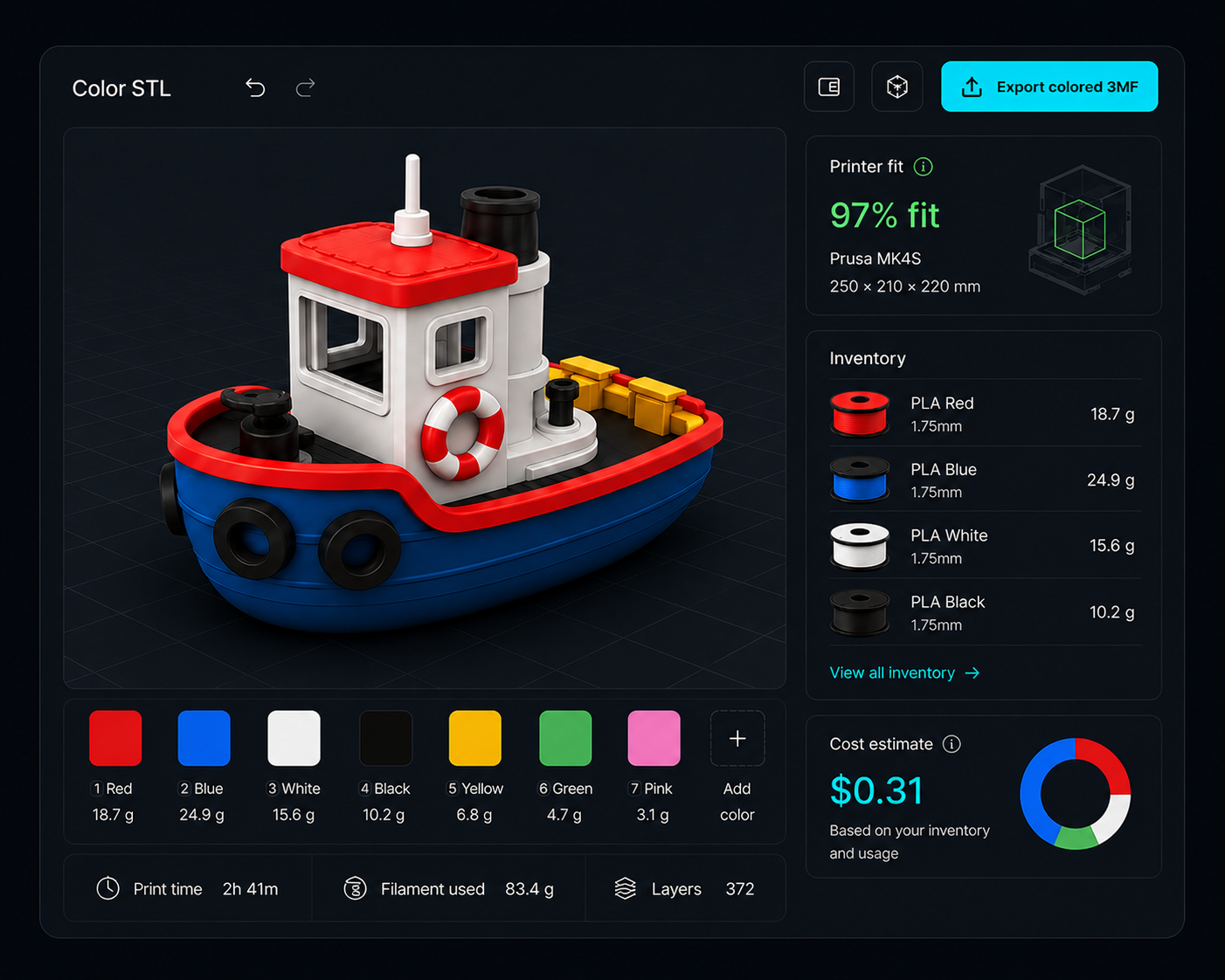
Color Studio is the planning layer for the messy middle: model preview, visual color choices, real filament context, printer fit, and a color-ready 3MF handoff.

1
Step

Upload or open the STL

Start with the model geometry. Color Studio gives you a visual place to inspect the model before assigning color regions.

2
Step

Choose filament colors

Pick the colors you want to use, then compare those choices against the filament and printer workflow you already manage in PrintNext.

3
Step

Paint model regions

Apply colors to meaningful regions, faces, or parts so the model becomes easier to understand before it reaches the final slicer.

4
Step

Preview the color plan

Review the colored model, color count, filament expectations, and printer fit before exporting the handoff file.

5
Step

Export a color-ready 3MF

Use 3MF when the next tool needs richer project data than a plain STL can reliably carry.

6
Step

Open the 3MF in your slicer

Use Bambu Studio, Orca Slicer, PrusaSlicer, or another printer-specific slicer for final machine setup and slicing.

Color Studio interface for coloring STL files and exporting colored 3MF files

Other coloring methods

How to color STL files in popular slicers

PrintNext does not need to replace your slicer. Use PrintNext to plan the color workflow, then use your printer-specific slicer for final machine setup.

How to Color STL Files with Bambu Studio

Bambu Studio is a common workflow for Bambu Lab printers and AMS setups. Import the STL, use the painting tools to assign colors, confirm the filament slots or AMS mappings, then save or export the project as a 3MF when you want to preserve color assignments.

  • Best for users already printing through Bambu Studio.
  • Check AMS color mapping before slicing.
  • Use 3MF for project handoff instead of exporting back to STL.

How to Color STL Files with Orca Slicer

Orca Slicer supports multi-color workflows for many printer profiles. Import the STL, use painting or object/color assignment tools, verify the selected printer and filament setup, then save a 3MF project when color assignments need to travel with the file.

  • Best for makers using Orca as their primary slicer.
  • Confirm the printer profile supports the color workflow you are planning.
  • Reopen the saved 3MF to verify colors are still present.

How to Color STL Files with PrusaSlicer

PrusaSlicer can support multi-material and manual color-change workflows depending on your setup. Import the STL, assign colors or parts as needed, configure extruders or color changes, and save the project in a format that preserves those decisions.

  • Best for Prusa and PrusaSlicer-centered workflows.
  • Manual swaps can work, but require careful timing and color-change planning.
  • Use project files or 3MF exports when you need to preserve setup details.

Real workflow screenshots

A complete STL coloring workflow

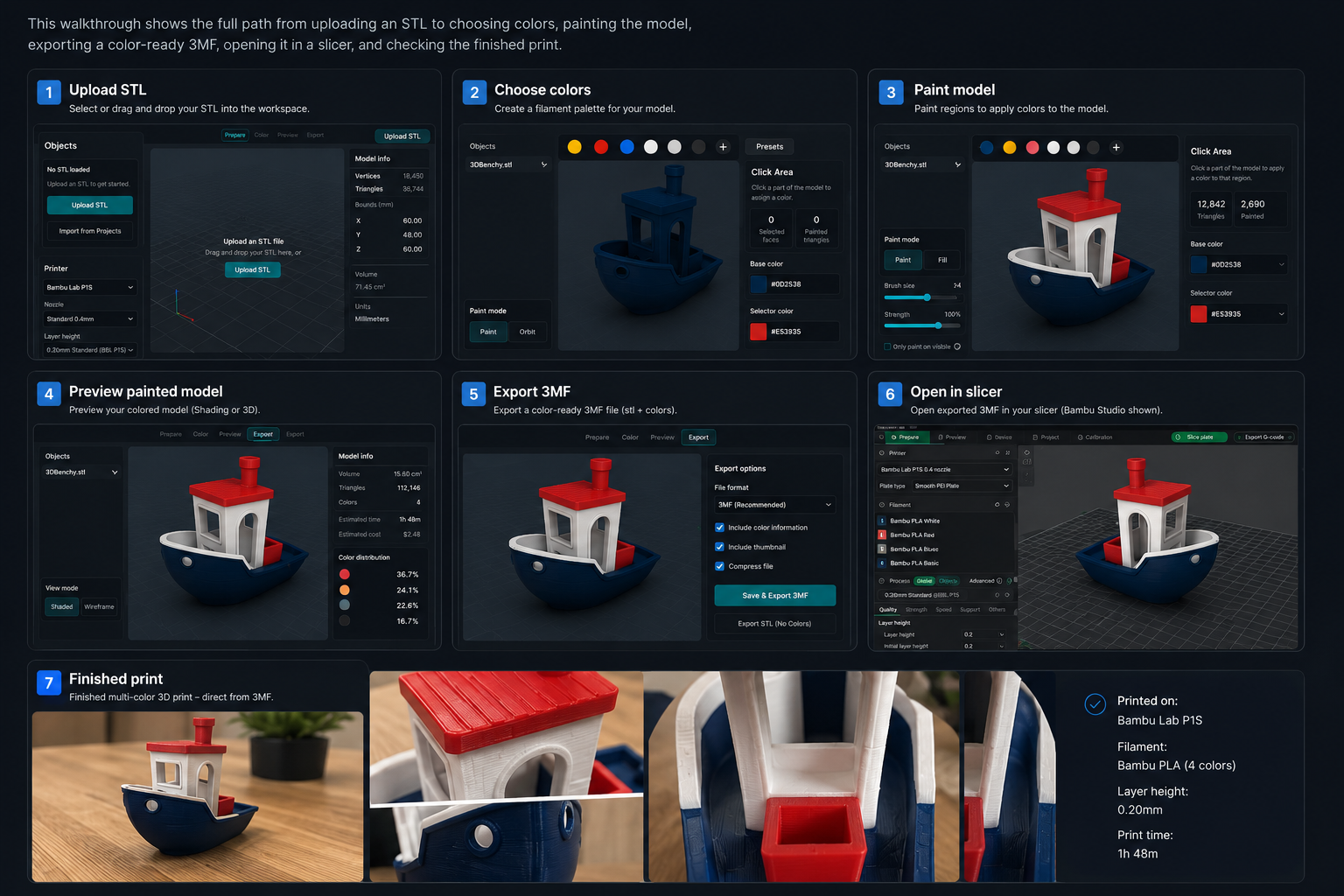
This walkthrough shows the full path from uploading an STL to choosing colors, painting the model, exporting a color-ready 3MF, opening it in a slicer, and checking the finished print.

Step-by-step workflow for coloring an STL file, exporting a 3MF, opening it in a slicer, and viewing the finished 3D print

Upload, color, preview, export, slice, and compare the finished print.

Printer setups

Supported printers and multi-color setups

The right color workflow depends on how your printer changes colors. A 3MF can preserve assignments, but the final print still depends on slicer settings, hardware, and filament setup.

Bambu Lab AMS systems

Plan the colors first, then confirm AMS slot mapping in Bambu Studio before slicing.

Multi-material printers

Use 3MF or slicer project files to preserve which regions map to which material or extruder.

Single-extruder color swaps

Color planning still helps, but the final workflow usually depends on pause points or manual filament changes.

Palette-style systems

Keep color count and material compatibility in mind so the generated print plan matches the hardware workflow.

PrintNext planning workflows

Use PrintNext to connect model color decisions with filament inventory, printers, recommendations, and saved projects.

Avoid these

Common mistakes when coloring STL files

Most color problems happen at the format handoff. Keep the color plan in a format that your next tool can actually read.

Coloring a model, then exporting back to STL and losing the color plan.

Opening a colored file in another slicer without checking whether color assignments survived.

Using more colors than the printer, AMS, or manual swap workflow can handle.

Painting broad surfaces without separating small details or functional regions clearly.

Forgetting material compatibility, nozzle setup, or filament availability before printing.

Troubleshooting

Troubleshooting colored 3MF files

Before starting a long print, reopen the exported file and inspect the slicer preview. That one check catches most color-handoff mistakes.

Colors are not showing in the slicer

Confirm you opened the 3MF or project file, not a re-exported STL. Then check whether the slicer imported objects, parts, and color assignments correctly.

Colors disappeared after export

Export or save as 3MF from the color workflow. STL is usually not the right final format for preserving color assignments.

The 3MF imports as one color

Check whether the source model was painted by object, part, or face. Some slicers need separated regions or supported paint data to preserve assignments.

The printer ignores color assignments

Verify printer profile, extruder/AMS mapping, filament slots, and slicer preview before sending the job.

The slicer opens the model but not the paint data

Try reopening the file in the tool that created it, then export a fresh 3MF and test it in the target slicer before printing.

Format choices

File format comparison: STL, 3MF, OBJ, AMF, and STEP

Different file types solve different problems. For color 3D printing, the important question is whether the format preserves the color and material information your slicer needs.

FormatStoresColor useBest for
STLMesh geometryPoor for color in most 3D printing workflowsSimple single-color models and broad compatibility.
3MFGeometry, color/material data, project metadataStrongColor-ready 3D printing projects and slicer handoff.
OBJGeometry with optional material referencesUseful in some design workflows, less universal for printingVisual model exchange when materials/textures matter.
AMFGeometry and material/color conceptsTechnically relevant but less commonSpecialized additive manufacturing workflows.
STEPCAD solids and engineering dataCAD-focused, not the normal slicer paint formatDesign, engineering, and editing before mesh export.

Method comparison

Estimated time by method

The exact time depends on model complexity, number of colors, and whether your model has cleanly separated regions.

MethodDifficultyTime requiredExports 3MFBest for
Color StudioEasy5-15 minutesYesPlanning colors, filament, printer fit, and project handoff in one place.
Bambu StudioMedium10-30 minutesYesBambu printers, AMS workflows, and final slicing.
Orca SlicerMedium10-30 minutesYesPrinter-profile-driven slicer workflows.
PrusaSlicerMedium10-35 minutesYesPrusa, multi-material, and manual color-change workflows.

Best workflow recommendation

Use STL for simple model sharing. Use 3MF when you need color, material, and project information. Use PrintNext when you want to connect color planning with filament inventory, printer fit, recommendations, saved projects, and a cleaner path to export.

Coloring STL files FAQ

Can STL files have color?

Some unusual STL workflows have color extensions, but most 3D printing workflows treat STL as geometry only. For multi-color printing, it is usually better to color the model and save or export a 3MF.

Why does my STL lose color when I export it?

The color work is usually stored in the slicer project or another richer format, not in the STL. If you export back to STL, the geometry may remain while color assignments disappear.

Is 3MF better than STL for multi-color printing?

Yes for most modern multi-color workflows. 3MF can preserve more project information, including color and material assignments, while STL is mainly a mesh geometry format.

Can I color an STL without Bambu Studio?

Yes. You can use Color Studio, Orca Slicer, PrusaSlicer, or other tools that support color painting or project-based color assignment.

Can I make multi-color prints without an AMS?

Yes, but the workflow is different. You may use manual color swaps, pause points, separate parts, or a multi-material accessory. Planning the colors first helps avoid surprises.

What is the easiest way to color an STL file?

The easiest workflow is to open the STL in a visual coloring tool, paint the model regions, preview the color plan, then export a color-ready 3MF for the slicer.

Does PrintNext export 3MF files?

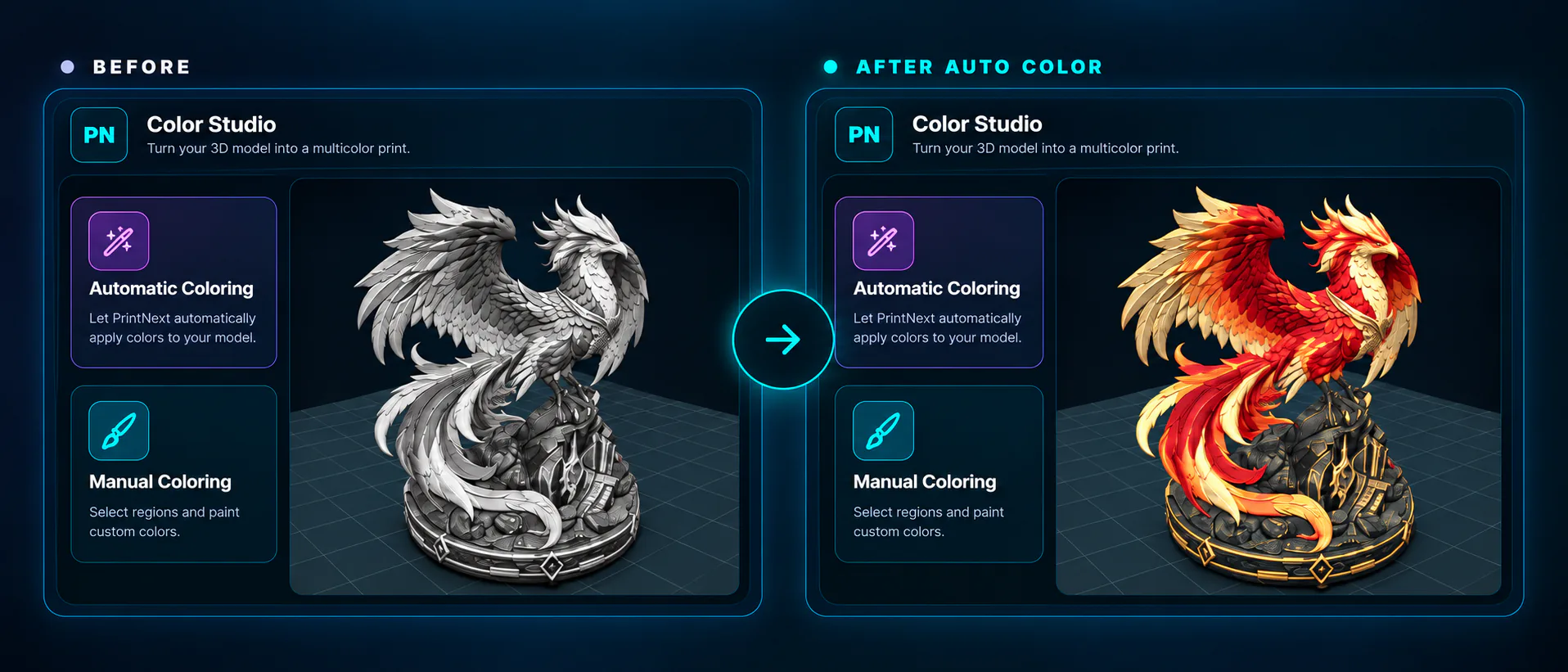
Color Studio is built around opening STL files, planning colors visually, and preparing color-ready 3MF handoffs for the rest of your 3D printing workflow.

Can Cura color STL files?

Cura is mainly a slicer workflow. Depending on your setup, you may need a separate coloring or project-prep step before final slicing, especially when you need color assignments preserved.

What file format preserves color for 3D printing?

3MF is usually the safest choice for preserving color, material, and project information across modern 3D printing tools.
Glossary

Key terms for STL coloring and 3MF export

These definitions help connect the file-format language with the practical steps makers use in real print workflows.

STL

A common mesh file format that usually stores model geometry without reliable color data.

3MF

A modern 3D printing file format that can carry richer project data such as colors, materials, and print setup.

Mesh

The triangle-based surface geometry that describes the shape of many 3D printable models.

Multi-color printing

A workflow where a print uses more than one filament color.

Multi-material printing

A workflow where a print uses multiple material types, colors, or extruders.

AMS

An Automatic Material System used by some Bambu Lab printers to manage multiple filaments.

Slicer

Software that converts a 3D model or project into printer instructions.

Filament profile

Settings that describe a filament material, temperature behavior, color, and print requirements.

Plan the colors before the print starts.

PrintNext helps you move from STL geometry to color planning, filament decisions, printer checks, and a color-ready 3MF handoff.